A Death Doula Magazine Conversation
Grief changes shape as life keeps moving
David Ferrugio was 12 years old when his father died in the World Trade Center on September 11, 2001. In the 25 years since, he has grown into adulthood alongside a grief that has changed shape with him — through milestones his father could not witness, conversations they would never have, and ordinary moments when absence makes itself known all over again.
His loss is deeply personal, while also being connected to a day remembered around the world. That intersection of private grief and public memory has shaped the way David has learned to carry his father's absence through adulthood.
Over the years, he has turned toward conversation. As the creator and host of DEAD Talks, David has invited others to speak openly about death, grief, loss, spirituality, and what these experiences can teach us about being alive. Now, with the release of You’re Not Dead Yet: How Grief and Loss Can Teach You to Live, he is sharing more of his own story than ever before.
Amy-Lynne sat down with David to talk about growing up with grief, finding expression when words were difficult, humor, listening, and what years of talking about death have taught him about living.
What follows is one person’s experience of learning, over time, to let grief be grief while still making room for life.
Amy-Lynne
This year marks 25 years since your father died on September 11. How has your relationship with grief changed as you have grown from a grieving child into the man you are today?
David
As grief does, it continually evolves. I feel that’s consistent with grief in general whether my own or anyone’s. And, it evolves into different shapes at different times for everyone.
For me, a lot of my processing has been as I’ve gotten older. My experience has been coming to terms with forgetfulness and the tale of time. I feel as if I am living the future I grieved as a child knowing I wouldn’t have new memories with my father. I wouldn’t be able to call him for a beer, for advice or go to a ball game.
My father only knew me as a boy and I knew there’d be a day where I’d be a man without a father. So, it’s an understanding of the waves of grief and how they pop up during obvious yet subtle realizations that, “oh yeah, I can’t talk to my dad about this.”
Even at 37 years old and 25 years later I still shed tears in certain moments. I still say that it sucks but even the pain is a representation of love.
So, long answer long, I suppose it’s changed by allowing it in. A long journey of giving the grief permission to be that... grief. And, to give myself grace along the way but realize at times I don’t want to give myself too much slack. There’s still life to be had.
“My father only knew me as a boy.”
David Ferrugio
Amy-Lynne
Your loss became part of a tragedy remembered publicly around the world. What has it been like to carry a deeply personal relationship and private grief within such a public story?
David
Simply stated, it’s strange. It’s a part of history. And, I understand that the event is much bigger than me. I am one of many that lost a father. I am one of many that lost a loved one. I am one of even more than were affected that day. Not to minimize my experience at all. But, to respect the happening which took place in the nature that it did.
The beauty was the coming together. The rallying of support my family was blessed with. Even with support grief remains an individual experience. Me vs. me. You vs. you. So, at times the attention around it is quite overbearing with the fact that it’s constantly in your face not only on the anniversaries but day to day in culture.
So, the balancing act of remembering the universality of September 11th is something to be respected; so is the individual’s personal experience.
Even 25 years later sometimes all I can exclaim is that it is simply just weird and absurd.
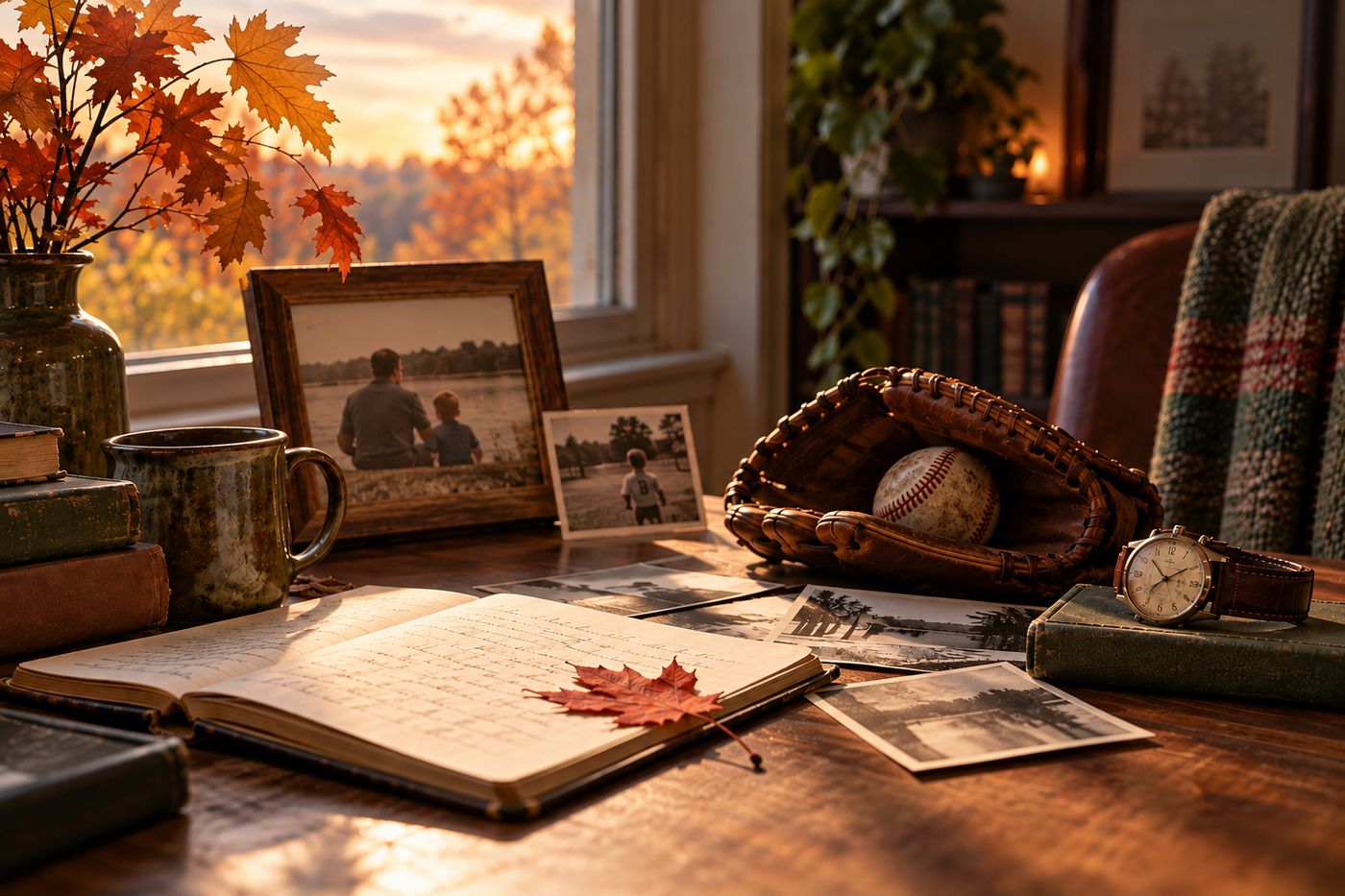 Grief can change shape as life changes, surfacing in both expected milestones and ordinary moments.
Amy-Lynne
Looking back, what forms of support helped you feel less alone as a grieving child? What do you wish the adults around you had understood then?
David
Something I highlighted in my book was the power of music for me. Specifically, listening to Linkin Park. I wasn’t very extroverted in my expression of emotions so a piece to my puzzle was the lyrics of someone else’s pain. With that music I tied it to a physical release of a punching bag. Understanding this is just letting air out of the balloon and rearranging an energy inside me that needed to be transmuted. Not the answer but a piece of many puzzles that continue to be a part of my life.
I liken it to accidental healing in a sense that I was just trying anything when I couldn’t find the vocal chords to strum.
I was given opportunities and support to express verbally but for whatever reason that took time. And, from what I remember I am lucky to have a family that allowed me to process it without forcing a modality on me. Even when I was a pain in the ass and they were probably right that more expression would be healthy they understood my place.
And, perhaps there’s a lesson in there to not force the way one person grieves onto another and to allow the process to naturally unfold.
One thing I’d tell my 12 year old self is to write down feelings more. To tell little David, “you don’t have to show anyone this.” That this is for him. Because of my forgetfulness I wish I had a clearer understanding of how I felt and what was going on in that underdeveloped noggin. It would not have only been helpful for that child but more a time capsule to reference as a man.
“Perhaps there’s a lesson in there to not force the way one person grieves onto another and to allow the process to naturally unfold.”
David Ferrugio
Amy-Lynne
After years of inviting other people to tell their stories through DEAD Talks, what felt different about putting your own story into a book?
David
It’s just more detail than I’ve ever shared. On the podcast, it comes in fragments. This I had to actually think and slow down. So, it’s even more vulnerability to allow people into my mind and heart. I’d be lying if I wasn’t feeling self conscious about whether people would resonate. I had to learn to let that go and just do my best to stay authentically me. To of course write for others, because that’s what it’s for, but to also write for me and in doing that I hoped something real would come out. And by keeping it “real” it could give it a better chance to resonate with others.
Amy-Lynne
Has a guest ever shared something that unsettled one of your long-held beliefs or changed how you understand grief, death, or the afterlife?
David
There’s too much to list. These conversations have not only opened me up in understanding grief, death and the afterlife but it’s shaped how I live my life day to day. From presence to compassion and everything in between. Because I feel the contemplation of death and experiences of grief apply lessons that affect how we live daily.
I’ve had my fair share of afterlife discussions and that avenue has shifted entirely. Not so much in my beliefs that we continue on because I have always believed that but now just in more depth. It’s made me consider things I haven’t considered before. Not to fall on the sword of absoluteness but contemplation and listening to that little thing we have, intuition, and allow that in to trust what resonates.
These discussions have taught me so much and the more I learn the more I realize there’s so much more I don’t know. And, that’s exciting to me.
 Conversation can create space for listening, reflection, and the questions that shape how we live.
Amy-Lynne
How have humor and laughter found a place alongside grief in your own life, and what have they taught you about the ways people continue to connect, remember, and heal?
David
Humor is everything to me. There’s a time and place for it and we have to read the room but it is a lifeline. It’s a reprieve. It’s a gift. It biologically changes us in the moment so why push that away?
I understand the feeling of thinking how we can laugh during difficult times. And, that’s okay too. But, also when the spontaneity of laughter pokes its little healing head, to allow it in. Even if for a moment. Because I believe sadness and joy co-exist. They don’t have to be mutually exclusive.
I’ve had to audit myself to make sure I’m not using humor as a defense. There probably were times I have and still do. But, with that examination I’ve learned it’s coping. Life is absurd. It’s scary. And, sometimes it’s so absurd and scary I just have to laugh in its face.
Amy-Lynne
Through DEAD Talks, you have created space for open conversations about death, grief, and loss. What have you learned about what helps people enter these conversations, and how can we make them a more natural part of everyday life?
David
Listen. Listen, listen, listen. Whenever I sit with someone on my podcast it’s not about me. It’s about the person I’m talking to. So, I feel when it comes to these conversations it takes us to be present and willing to listen.
It’s important, in your own way, to make the other person feel comfortable sharing the space. Sometimes that takes offering your own vulnerability to take their guard down. In an honest and authentic way.
Humans are strange. I think we just want to have a voice. And to have a voice that is heard. So, sometimes it’s as simple as saying less and allowing more.
There’s no rules to this. I don’t have the prescription to any of this. But, I’d start with trusting yourself to be present, compassionate and listen.
“Sometimes it’s as simple as saying less and allowing more.”
David Ferrugio
Amy-Lynne
Through your conversations with guests on DEAD Talks, have you noticed a growing awareness of the need for support beyond medical care at the end of life?
David
Over the last six years, I have noticed a cultural trend of more shows like mine and conversations like mine coming to the forefront, which is the whole point: to normalize the conversation around death, as it affects us all.
With that being said, it does show me the growing awareness and need for support beyond medical care at the end of life because, as a society here in America, there isn’t much grief education. I’m seeing more signs of that coming into the education system, which is great and further supports the need.
Amy-Lynne
Death doulas are part of that changing landscape. What difference do you believe this kind of presence can make for individuals and families?
David
I think the presence of support at the end of life and after is of great importance, whether through doulas or any other forms. Grief is such a challenging experience. It is a normal experience, yet feels so abnormal. Our entire world is stripped down, and we have to learn how to exist with life after grief. Support is such a pivotal puzzle piece to that experience.
I just hope the support that continues to grow stems from authenticity and a place of love.
“I just hope the support that continues to grow stems from authenticity and a place of love.”
David Ferrugio
Amy-Lynne
Outside of DEAD Talks, what other creative outlets do you enjoy, and what does life look like for you when you aren’t talking about death and grief?
David
I have a deep passion for new experiences and traveling. Often those come together so if I can’t swing a trip I love going to new places whether in nature, a comedy show or a concert. But, when I’m able to travel I love getting lost in new cultures. Experiencing new foods, learning new perspectives and diving into the unknown.
When I travel I often do it with little to no plan. Which often leads me to miss out on some things but it allows me to feel free.
Outside of the existentialism, I am very active. I play a lot of sports and enjoy getting a workout in. It relates to that physical release I did as a kid with the punching bag. Movement heals. And, ideally, I’d like to be able to keep this meat suit of mine running strong as long as possible so I can continue to do the other things I love longer.
“There’s still life to be had.”
David Ferrugio